
For caregivers and patients alike, the simple act of moving from a seated to a standing position can be a daily challenge fraught with risk. Traditional manual lifting methods often lead to caregiver back injuries, patient discomfort, and a loss of dignity. The evolution of patient handling technology has introduced a pivotal solution: the power sit to stand lift. This device is not merely a piece of equipment; it is a transformative tool that redefines mobility assistance. Unlike full-body sling lifts, a power sit to stand lift is designed specifically for individuals who can bear some weight on their legs and possess sufficient upper body strength to grasp handles. By leveraging a powered actuator and a strategically padded knee support, these lifts smoothly guide the patient from a sitting position to a standing one, reducing the physical strain on both the patient and the caregiver. This article delves into the mechanics, real-world benefits, and critical features of these lifts, illustrating why they have become indispensable in modern healthcare and home care settings.
Understanding the Mechanics and Benefits of a Power Sit to Stand Lift
At its core, a power sit to stand lift operates on a simple yet effective principle: it uses a motorized mechanism to assist a patient’s natural standing movement. The patient sits on a sling or a specially designed seat attached to the lift’s boom. A padded knee support stabilizes the legs, preventing the patient from sliding forward. As the lift is activated, the boom raises, gently pulling the patient into an upright, weight-bearing position. The powered component is what sets it apart from manual stand assists—it eliminates the need for a caregiver to physically crank or pump a hydraulic lever, thereby significantly reducing the risk of musculoskeletal injuries among healthcare workers. Studies consistently show that powered lifts cut the physical effort required from staff by over 50%, translating to fewer lost workdays and higher job satisfaction.
The benefits extend beyond caregiver safety. For patients, the power sit to stand lift offers a therapeutic advantage. Because the patient actively participates in the transfer by bearing weight through their legs, it helps maintain muscle strength, joint mobility, and circulatory function. This is particularly crucial for individuals recovering from hip or knee surgery, stroke survivors, or those with progressive conditions like Parkinson’s disease. The controlled, steady motion of the lift also reduces patient anxiety during transfers, as the smooth ascent avoids sudden jerks or tipping. Additionally, the lift’s design often includes compact base legs that fit under most beds, wheelchairs, and commodes, making it a versatile tool in both clinical and home environments. When integrating such equipment into a care plan, many professionals recommend exploring a power sit to stand lift as a primary option for safe, dignified daily transfers.
From a biomechanical perspective, the lift aligns with the body’s natural center of gravity. The knee support and hand grips allow the patient to engage their core and legs, promoting a more active rehabilitation process. Caregivers also benefit from improved ergonomics—they no longer need to stoop or twist awkwardly. Instead, they simply guide the patient’s torso and ensure proper foot placement. This collaborative transfer reduces the fear of falling, a common barrier to independence for elderly patients. With a power sit to stand lift, caregivers can perform dozens of transfers per day without cumulative strain, all while maintaining a respectful and empowering patient experience.
Real-World Applications: Case Studies in Rehabilitation and Home Care
The versatility of power sit to stand lifts is best understood through concrete examples. Consider the case of a 72-year-old patient named Margaret, who had a total knee replacement. Initially, her physical therapy sessions required two therapists to manually assist her from her bed to a wheelchair. The process was exhausting for the staff and painful for Margaret, who feared losing her balance. Upon introducing a power sit to stand lift, the dynamics changed instantly. Margaret could grasp the handles, place her feet correctly, and let the lift guide her upward. Within two weeks, she was able to transition from the lift-assisted standing to independent standing with a walker for short periods. The lift not only accelerated her recovery but also preserved her dignity—she no longer felt like a passive object being moved.
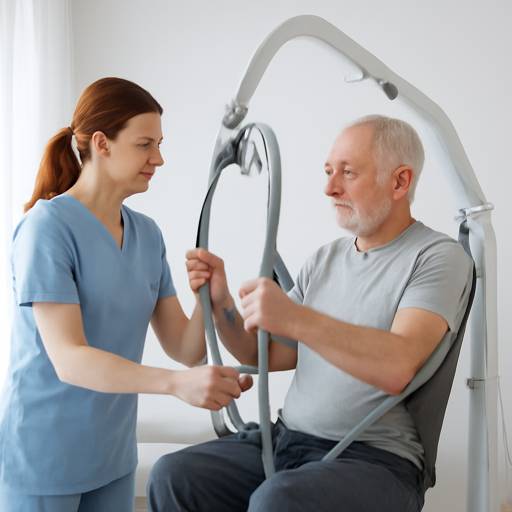
In another scenario, a home care agency in a rural area deployed power sit to stand lifts for clients with advanced multiple sclerosis. One such client, James, had gradually lost the ability to stand from his wheelchair without help. His wife, a petite woman in her sixties, was risking her own health every time she assisted him. The lift’s battery-powered operation meant she could position it, activate the lift with a remote, and safely transfer James to his recliner or toilet. Over six months, James’s leg strength actually improved enough that he could partially hold his weight during the lift—a direct result of the active standing exercise. His wife reported a dramatic reduction in her back pain and a renewed sense of confidence in managing his care at home.
Hospital rehabilitation units also provide compelling evidence. A study at a mid-sized urban hospital tracked fall incidents during patient transfers over a one-year period. After implementing power sit to stand lifts across three orthopedic wards, the facility saw a 62% reduction in patient falls during transfers and a 78% decrease in caregiver injuries related to lifting. The lifts were especially effective for patients with compromised balance, such as those recovering from hip fractures. Nurses reported that the lifts allowed them to focus on patient positioning and verbal coaching rather than on brute force. These real-world examples underscore that a power sit to stand lift is not just a convenience—it is a clinical intervention that improves outcomes for both patients and providers.
Key Features to Consider When Choosing a Power Sit to Stand Lift
Selecting the right power sit to stand lift requires careful evaluation of several critical features to ensure safety, comfort, and longevity of use. First, consider the weight capacity. Most standard lifts accommodate patients up to 400 pounds, but bariatric models can handle 600 pounds or more. Always verify that the lift meets the specific needs of the primary user. Second, the base width is crucial for stability and maneuverability. A wider base provides greater stability during the lift but may be harder to fit under narrow furniture. Many modern lifts offer an adjustable base that widens during the lift and narrows for rolling, combining safety with accessibility.
Another vital feature is the knee support design. Padded, contoured knee supports that adjust in height and depth prevent the patient from sliding and distribute pressure evenly, avoiding skin breakdown. Look for knee pads with removable, washable covers for hygiene. The lifting mechanism itself should be quiet and smooth. Battery-powered electric lifts offer freedom from wall outlets, with battery indicators to avoid unexpected power loss. Some models include a manual emergency backup hand crank, which is essential for safety. The controls should be intuitive—handheld pendants with large, easy-to-press buttons are ideal for both caregivers and patients who can operate the lift independently.
Ergonomics for the caregiver also matter. The lift’s push handles and rolling casters should glide easily over thresholds and carpets. Swivel casters with locking brakes improve directional control and prevent unintended movement during transfer. Additionally, consider the sling system. Some lifts use a universal sling that works with different models, while others require proprietary slings. Reusable slings are cost-effective but must be laundered; disposable options reduce cross-contamination risk in hospitals. Finally, evaluate the warranty and service options. A lift is a long-term investment, and prompt technical support can make the difference between a minor issue and a major disruption in care. By weighing these factors, facilities and families can invest in a power sit to stand lift that delivers reliable, daily performance while keeping all parties safe and comfortable.
