
The most exciting breakthroughs often begin as student curiosity: a faint dip in starlight that hints at a new world, a pattern in reaction times that reveals how memory works, or a coordinated dance of small robots solving a real problem. This guide unites three high-impact frontiers—astronomy, cognition, and robotics—into a roadmap of projects that build genuine research skills. With public datasets, open-source tools, and accessible hardware, learners can contribute to ongoing conversations in science and engineering while mastering analysis, design, and storytelling with data. Along the way, emphasizing reproducible methods, evidence-based conclusions, and ethical practices sets projects apart in competitions, college applications, and community showcases.
Astronomy Research Ideas and Space Telescope Projects You Can Actually Do
In astronomy, a laptop can be a laboratory as powerful as a backyard observatory. Compelling astronomy research ideas start with open archives: NASA’s Mikulski Archive for Space Telescopes (MAST) contains TESS, Hubble, and Kepler data, while ZTF and Pan-STARRS offer wide-field surveys of transient objects. Students can perform exoplanet transit photometry by downloading TESS light curves and applying detrending, outlier removal, and transit-model fitting with tools like Lightkurve, AstroImageJ, or Python libraries (NumPy, SciPy, batman). Measuring the depth and duration of a dip in brightness, then estimating planetary radius relative to its star, transforms abstract astrophysics into concrete, defensible results.
Another strong pathway is variable star analysis. With AAVSO data or your own DSLR/CMOS images, create calibrated light curves to classify Cepheids, RR Lyrae, or eclipsing binaries. Computing periodograms (Lomb–Scargle) and folding the data on candidate periods demonstrate skills in time-series analysis and error propagation. For spectroscopy, a simple diffraction grating attached to a small telescope or even a camera can reveal absorption lines; comparing observed spectra to stellar libraries allows basic spectral typing and temperature estimation.
Students drawn to Space Telescope Projects can mine the Hubble Legacy Archive for star clusters, then construct color–magnitude diagrams to estimate cluster ages and metallicities. Image processing with SAOImage DS9 or Astropy’s photutils teaches background subtraction, aperture selection, and uncertainty budgeting. For galaxies, measuring surface brightness profiles and fitting Sérsic indices introduces quantitative morphology and can be connected to evolutionary scenarios. Those interested in near-Earth objects can extract asteroid light curves to find rotation periods, discussing how shape and albedo influence observed brightness.
Methodology matters as much as discovery. Pre-register a research plan, keep a lab notebook of processing steps, and validate results against published benchmarks. Summarize with clear plots (matplotlib), confidence intervals, and well-labeled axes. Tie findings to theory: link transit depth to planet-to-star radius ratio, or connect pulsation period to intrinsic luminosity via the period–luminosity relation. These practices elevate student work from hobbyist exploration to credible, citable analysis.
Cognitive Science for High School: Experiments that Decode Learning and Attention
Designing experiments in cognitive science for high school turns everyday mental skills—attention, memory, decision-making—into testable hypotheses. Begin with classic paradigms: the Stroop task to measure cognitive control; the N-back for working memory; the Posner cueing task for spatial attention; or the Serial Reaction Time task to study implicit learning. Open-source software such as PsychoPy, OpenSesame, or web-based platforms like jsPsych and Pavlovia enables precise stimulus timing, randomization, and automated data capture across devices.
Strong projects pair a clear question with a measurable outcome and a principled analysis plan. Investigate how sleep duration affects N-back accuracy, whether background music alters Stroop interference, or how spaced repetition changes word-list recall. Collect sufficient trials per participant to reduce noise, and recruit a reasonable sample while respecting consent, privacy, and debriefing norms. Calculate effect sizes (Cohen’s d), confidence intervals, and apply appropriate tests (t-tests, ANOVA, mixed-effects models for repeated measures). Visualize with violin plots or confidence bands, and report both significant and null results without p-hacking.
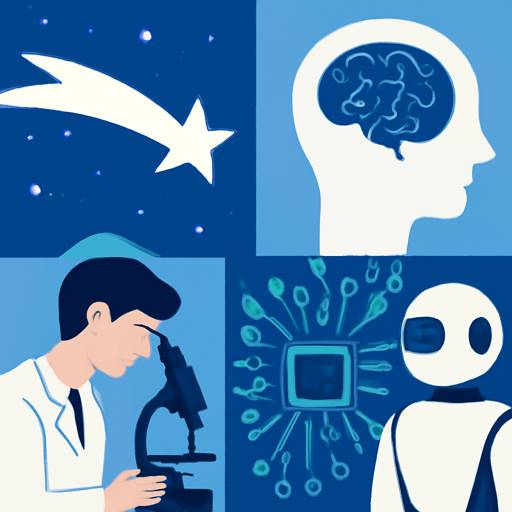
Technologies can expand the scope without inflating costs. Smartphone tapping tasks can measure reaction time distributions; camera-based gaze approximations or low-cost eye trackers can explore attention allocation; consumer EEG headbands, while limited in spatial resolution, may allow exploratory work on alpha-band power during attentional tasks, provided claims remain cautious and grounded in literature. Importantly, pre-study power analyses help set realistic sample sizes; pilot testing confirms stimuli clarity and timing fidelity.
Contextualize findings within foundational theories: dual-process models explain Stroop interference; Baddeley’s model frames working memory results; signal detection theory interprets trade-offs between hits and false alarms. Integrative projects can connect cognition to STEM learning—for instance, testing whether interleaving problem types in math practice improves transfer relative to blocked practice. Emphasize reproducibility by sharing anonymized datasets, code, and experiment scripts. By combining rigorous design, ethical conduct, and lucid interpretation, students produce work that is both educationally valuable and scientifically informative.
Humanoid and Swarm Robotics: Building Skills Through Real-World Challenges
Robotics projects cultivate systems thinking across mechanics, control, sensing, and software. For humanoid robotics for students, start in simulation to de-risk hardware: PyBullet, Gazebo, or Webots let learners prototype gaits, test inverse kinematics, and tune controllers before touching a servo. A minimal biped or torso-on-wheels platform teaches center-of-mass management, ZMP (zero-moment point) ideas, and stability margins. IMU fusion (complementary or Kalman filters) stabilizes posture; PID or model-predictive control refines joint trajectories. Onboard vision with a monocular camera and lightweight models (MobileNet, YOLO-Nano) supports line following, gesture recognition, or fiducial tracking, while simple speech interfaces enable task-state transitions.
Progression is key. Begin with joint calibration and kinematic chains; move to walking on flat terrain with footstep planners; add disturbance rejection using reactive strategies; then explore manipulation via 4–6 DOF arms, grasp planning on basic objects, and safety interlocks for torque limits. Evaluation metrics—fall rate, energy per step, mean time between faults—focus iterations. Document every change and compare logs to ensure improvements are data-driven. Integrating SLAM on a mobile base (e.g., ROS2 with Nav2) transforms a static demo into an autonomous assistant that maps classrooms and navigates hallways.
In parallel, swarm robotics offers an alternative mindset: many simple agents producing complex collective behavior. With low-cost differential-drive bots or simulated swarms, implement Boids-style flocking, dispersion for search-and-rescue, formation control with consensus algorithms, and foraging with pheromone-inspired heuristics. Communication can be achieved with Bluetooth mesh, ESP-NOW, or IR signaling, while onboard localization uses AprilTags or ultra-wideband anchors. Performance can be quantified by coverage percentage, time-to-find target, collision rate, and energy use per task.
Case studies illustrate impact. A high school team built a six-robot foraging swarm that outperformed a single larger robot on cluttered-course retrieval by tuning local rules and congestion penalties. Another group prototyped a small humanoid greeter that recognized student badges via QR codes, directing them to resources using waypoint navigation. Cross-pollination is powerful: a swarm can map a space and hand off a coarse map to a humanoid, which completes fine manipulation tasks. For more inspiration and scaffolding, explore Swarm robotics student projects that detail architectures, codebases, and testing protocols suitable for classrooms.
Bridging robotics with earlier sections opens interdisciplinary routes. Use a cognitive experiment to test human–robot interaction: does gaze direction or response latency change trust in a humanoid assistant? Apply astronomy-style data pipelines to multi-robot logs: timestamp synchronization, noise modeling, and outlier rejection. Throughout, highlight scalable design (modular parts and reusable code), transparent evaluation (pre-registered metrics and ablation studies), and ethical deployment (privacy, safety, and accessibility). These principles make robotics outcomes replicable, extensible, and meaningful beyond a single showcase.
